
The Lake District
With Gratitude for the Privilege to Travel

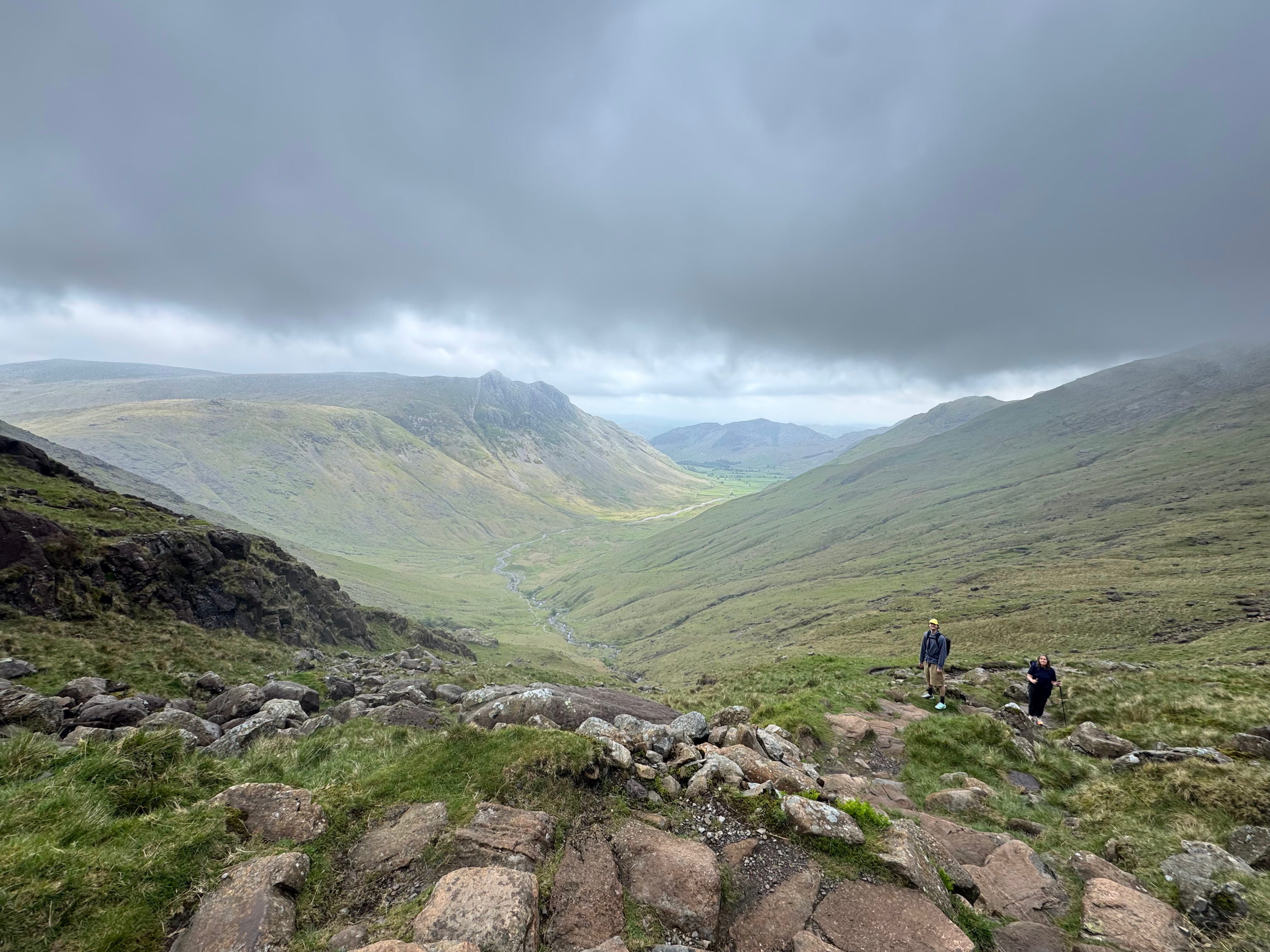
The Lake District is a national park of the United Kingdom located in the northwest corner of England. It was established in 1951 and covers a large area of relatively undeveloped mountainous land but includes the villages and farmlands of permanent inhabitants inside it, which is very different than national parks as we know them in the US. Land remains privately owned, but planning councils are more strict balancing priorities of public access, environmental concerns, and the economic needs of the communities within it. It is a pastoral landscape with traditional rock walls separating sheep grazing on the hillsides, criss-crossed by a network of paths hundreds of years old, giving access to anyone on foot. These footpaths are old times trade routes back to neolithic times, the Romans had forts along these paths, Norse and Anglo-Saxon farmers traversed these paths, miners moved metal ores, slate, coal, and graphite out through packhorse train. It wasn’t until more recently that the Romantic poets changed the perception of these high, hard to access places, and they became traveled by recreation walkers, seeking the beauty of nature.
This landscape is very connected to the history of English literature. Perhaps most known is it was the home of the 19th Century “Lake Poets” - William Wordsworth, Samuel Taylor Coleridge, and others. Wordsworth is credited with making the region famous. He was much concerned with its development and particularly the enclosure movement which was beginning to limit public access to lands. Ironically his own poetry brought much attention to the country he loved and the demand this caused intensified the conflicts. The author Beatrix Potter spent her childhood summers in the district and set her stories of Peter Rabbit in the area. She used proceeds from the story sales to purchase and preserve vast tracts of land that are now managed by the National Trust.
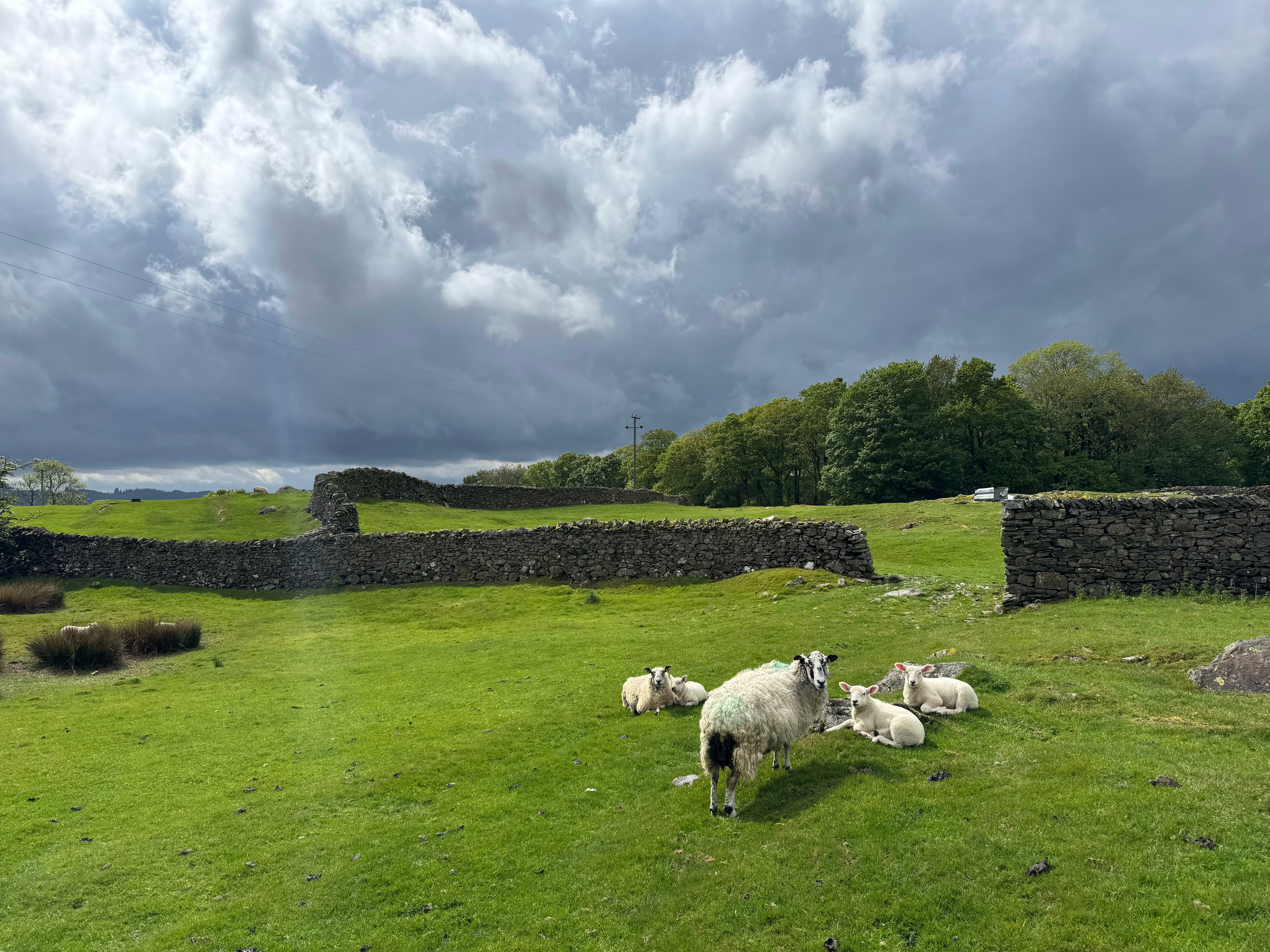
If you recall, Peter Rabbit snuck into Mr. McGregor’s garden to eat as many vegetables as he could before the farmer spotted him and chased him away. The stories exemplify tensions that are present in a region that is balancing many priorities. We wouldn’t necessarily have encountered such tensions, wandering in the unknowing way tourists do. Peter Rabbit had his mother to warn him, we had signs. But still we went the wrong way.
We were in a blissful reverie of awe at our luck to be traipsing through all the beauty and the sign wasn’t clear. So we followed our tourist instincts into the pasture in front of us, enjoying the fresh air, the beautiful view, the cows - like Peter Rabbit and the vegetables. It took grouchy farmer a few calls, before we finally realized the stern voice from the homestead below was aimed at us. By the time we turned towards him, the message was “GET DOWN HERE NOW,” as if addressing adolescent rabbits. We responded with dumb surprise, he must not know which direction we are going. “We are going to Ambleside!” We called back.
“THAT IS NOT THE WAY!”
We decided a simple arrow on a stick would be all he needed to clear things up and
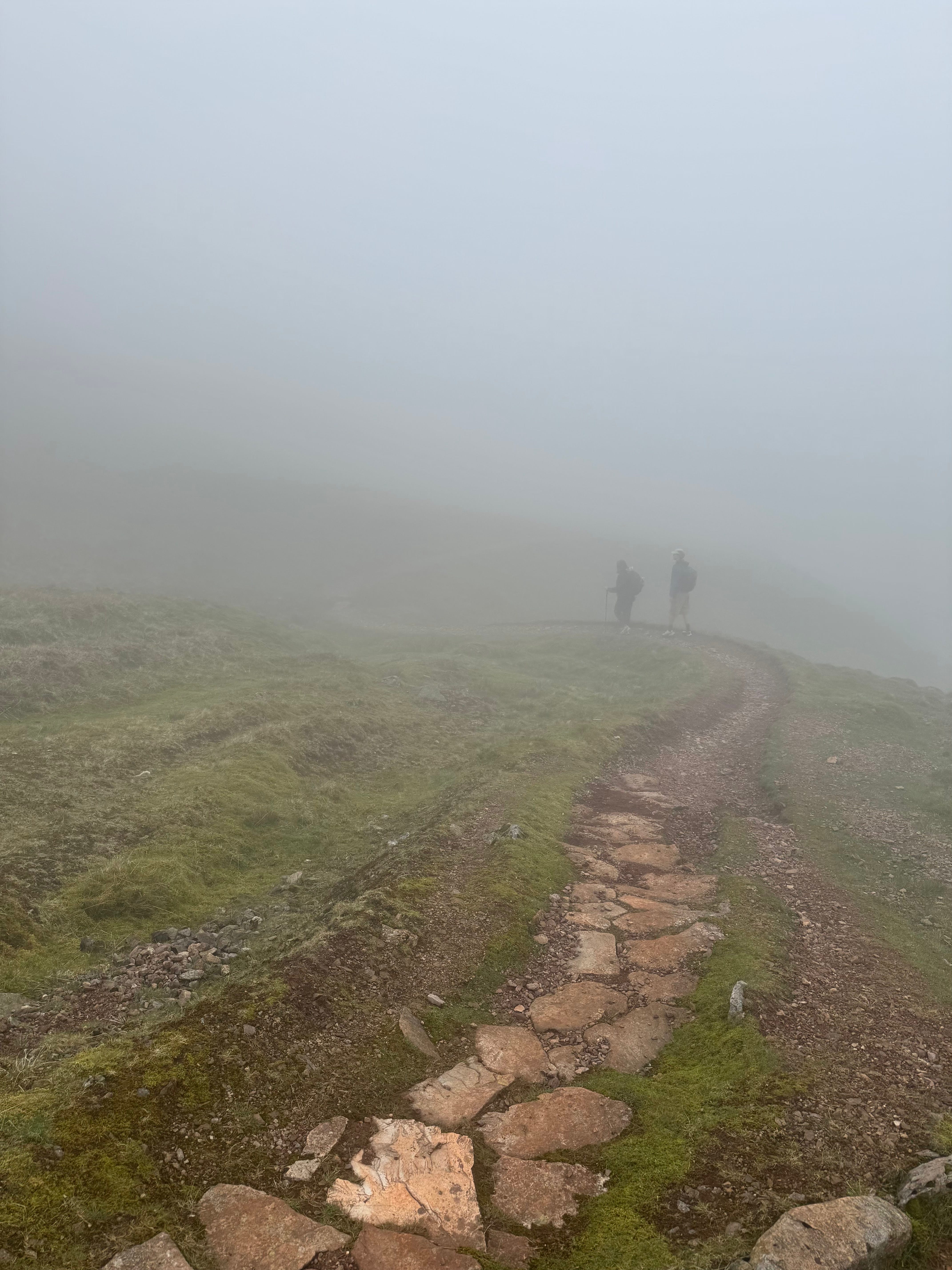
Along the path, walkers are directed by yellow arrows. They climb over stiles, or go through gates, and usually, there is a clear trail through the grass. Other times you are on paved roads. Or there are unruly, bowling ball sized boulders, shaped in all sort of manner, that have been arranged into a path. Or at least tossed into the semblance of one. In this case, we had entered through the gate, heeded the warnings to shut it behind us so as not to let dogs in to harm the lambs. But inside there was no clear path at all. We were to turn right and follow along the wall to a second gate and from there, outside the pasture wall, the trail took off to the left. None of this was clear to us. Our Mr. McGregor demanded we come back down, and waved us off like a waste of his time and breath when we apologized, and stalked off.
And we continued our journey
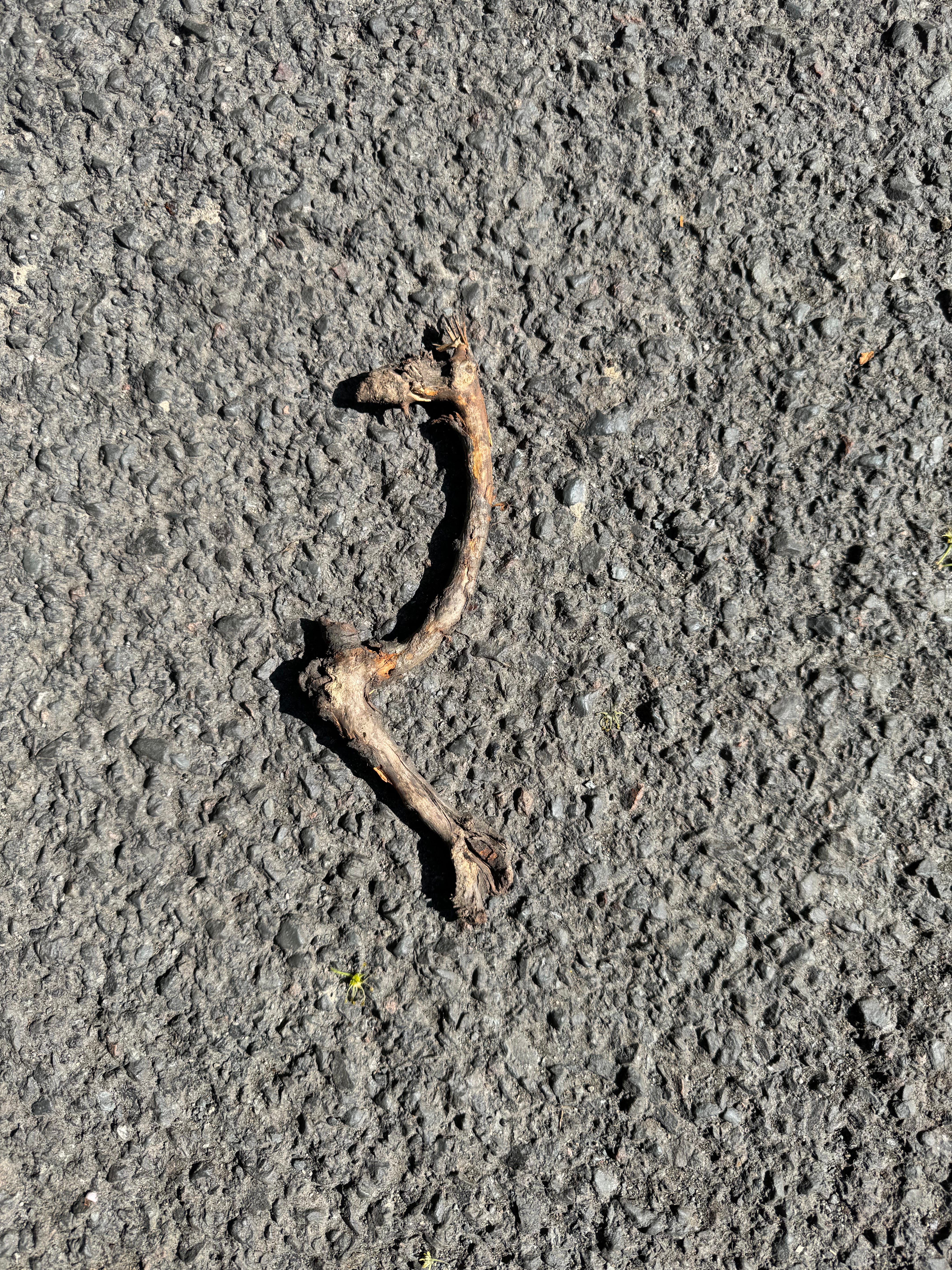
The features of the landscape are named in a mashup of many languages and are evidence of layers of history. The area is referred to as Cumbria, after the early Middle Ages people who inhabited the area south of Scotland and the “Old North,” or Yr Hen Ogledd. They spoke the Cumbric language, which is a sister to Welsh. That language co-mingled with the old English until the Vikings arrived and brought in some Old Norse place names as well. But you will find examples of the following all over the landscape. Tarns are lakes. Ghylls are ravines. The waterfalls themselves are called a force. Mountains are referred to as fells, and peaks are pikes.
When up at the top of Langdale valley we spoke to a volunteer trail crew and one of them schooled us on the name eck hause. He said it real low and long, hoooose. He repeated for us quite a few times. “People say house, but that is not how you say it.” A hause is the open meadow on the shoulder between peaks, a place that Josh always refers to as a “saddle.” But after mouthing hoose several times, the man told us it has many names, it’s also sometime called a coomb or a corry — if my imperfect memory recollects.
Gratitude for this privilege to push myself. The gift of fulfilling a dream of walking from one nights stay to the next.
I Wandered Lonely as a Cloud
by William Wordsworth
I wandered lonely as a cloud
That floats on high o'er vales and hills,
When all at once I saw a crowd,
A host, of golden daffodils;
Beside the lake, beneath the trees,
Fluttering and dancing in the breeze.

Continuous as the stars that shine
And twinkle on the milky way,
They stretched in never-ending line
Along the margin of a bay:
Ten thousand saw I at a glance,
Tossing their heads in sprightly dance.

The waves beside them danced; but they
Out-did the sparkling waves in glee:
A poet could not but be gay,
In such a jocund company:
I gazed—and gazed—but little thought
What wealth the show to me had brought:

For oft, when on my couch I lie
In vacant or in pensive mood,
They flash upon that inward eye
Which is the bliss of solitude;
And then my heart with pleasure fills,
And dances with the daffodils.
On what I saw in the Lake District
by Tina Laurel Lee
The first day I decided to write a Poem about poppies.
It was only Wednesday after all
And there I was on a hillside
As new as the lambs

An ode not to daffodils,
And not to Wordsworth
But to the orange currently brightening the hedgerows
Which sprung from cracks between church stones,
Which was more brilliant than our Nikes,
Poppies, metronoming in the breeze.

Also, the shade of pink!
Not just a whim of the artist
Was the lamb’s ear.
More adorable even in nature
Than the storybook illustration.
Real life is all that’s needed for inspiration!

Four days and many miles by foot
The veil of comfort has been pierced
No longer new as a lamb’s ear
You’ve found the lucid dream of transformation.

And the poppies still intrepid as any tourist,
Counting time like a song for the eyes.
But I am worse for wear
And better for having gone farther than before
What wealth the show to me had brought
Fine like a lamb’s ear
And the delicate tissue of petals
And as anti-frágil as nature itself
To go beyond the confort zone.