
The Essential Dr. Martin Luther King Jr
Lots of annotated reading, listening, and watching for your MLK Weekend.

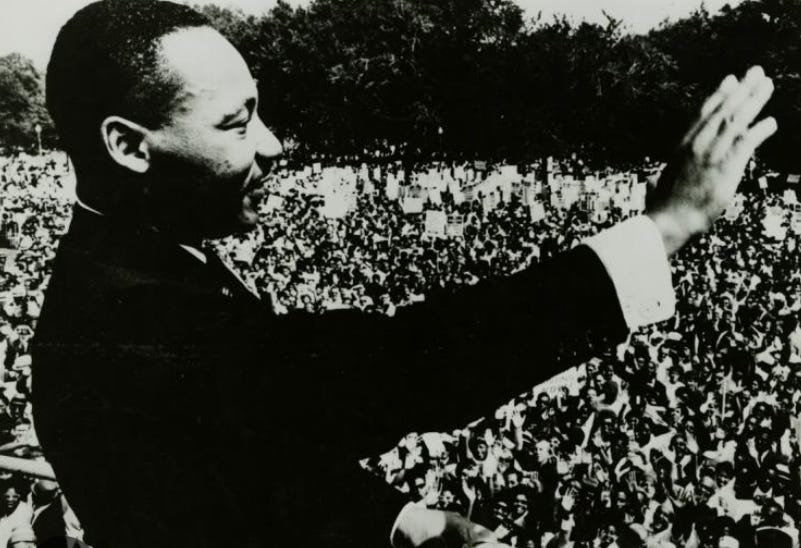
Martin Luther King Day was established as a federal holiday in the United States by President Ronald Reagan in 1989. It is recognized every year on the third Monday of January, which comes around again a couple days. In 1994 President Bill Clinton signed into law legislation written by House Representative John Lewis and Senator called the King Holiday and Service Act. It is the only federally recognized holiday that encourages active citizenship in pursuit of a more equitable society.
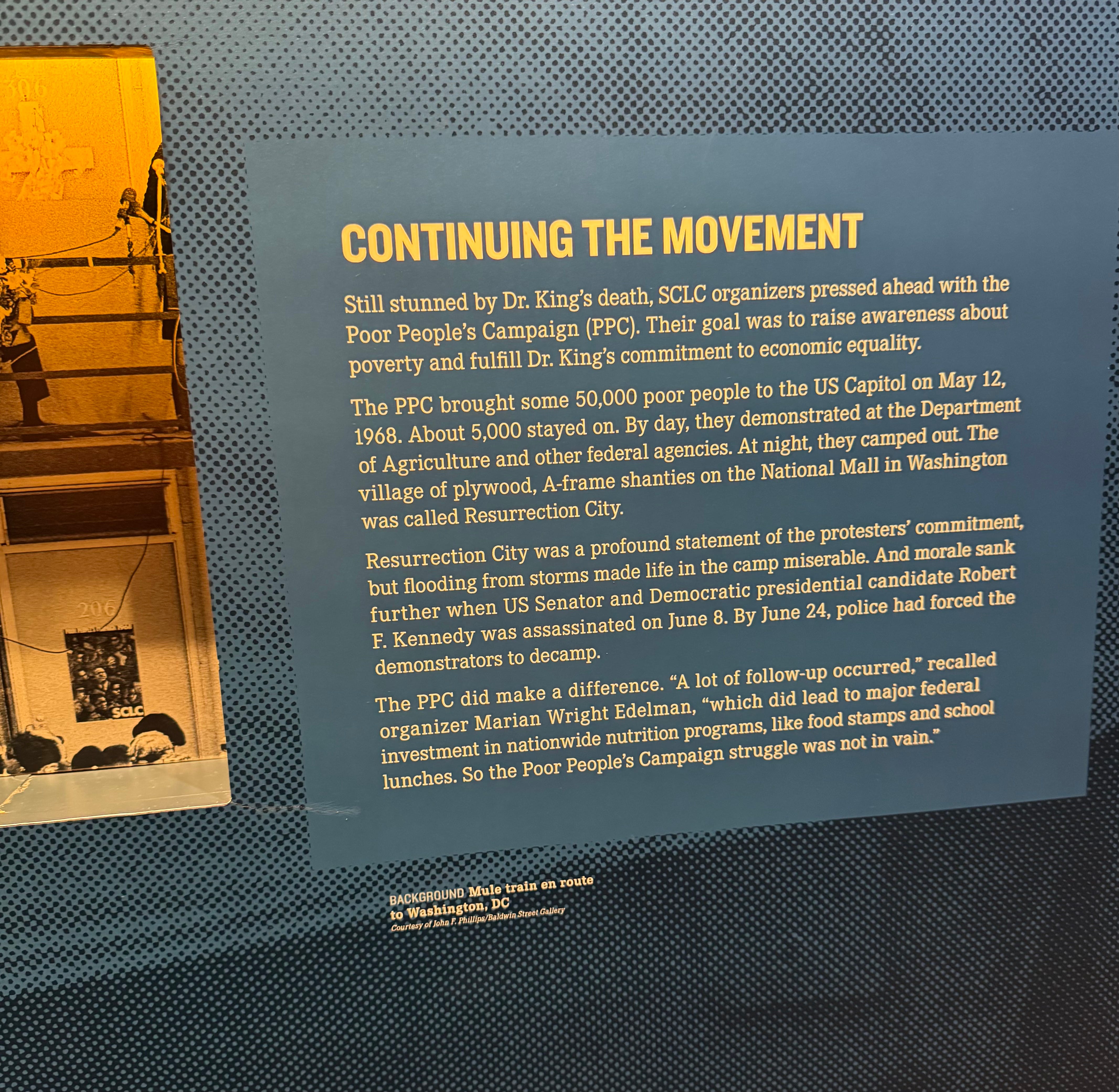
Dr. King’s career was shaped by the challenges he faced while sharing his message of civil rights. His work had made him both a celebrated leader and a target of intense opposition. By the time of his assassination, he experienced waning public support and intense government efforts to stifle his influence. He carried the full weight of FBI surveillance. The arc of his leadership offers us a chance to look at what is at stake when resistance becomes a threat for those in power. Dr. King persisted, fully aware of the dangers he faced. He called for a moral revival that would undercut the nation’s persistent blindness to inequities and bring about repair. In the months leading up to his assassination in 1968, King launched the Poor People’s Campaign.
His legacy urges us to remain vigilant and courageous in the face of adversity. With large scale ICE operations in our state and specifically the Minneapolis/St. Paul metro area, we are seeing how a federal government threatened by people’s resistance to power behaves. I will publish more about experiences here on the ground tomorrow when the New Moon comes around, but I wanted to make a link post available to you today.
So the work continues in our hearts and communities, let King’s words and dedication inspire your continued participation in bringing about reckoning and repair that this country so desperately needs. Thank you for all you do already 🙏🏼
I will start this list with this link to YouTube Clip from a PBS special that includes portions of King’s speech and the story of his assassination. It is excerpted from a documentary of how the year 1968 changed America. It includes references to King’s concerns about protests turning violent, both in Memphis with paid FBI operatives and the Poor People’s Campaign they were planing for in Washington DC in May. Watch here.


As King himself taught us, the arc of the moral universe is long. And below are many more links for your reading, listening, and watching pleasure. Let your reading be a first small step in a year of resistances—one that carries forward Dr. King’s dream of a just and compassionate world. Please continue at your own pace. Love to you and yours.
Further Resources:
This short article by Dr. James Peterson outlines “The Blueprint for the Beloved Community” in Wurd Magazine. It lays out the essential attributes of the Beloved Community and offers a framework for fostering justice and equality in our daily lives.
If you are an NPR Member you can listed to this Throughline Episode where Jonathan Eig is interviewed about Dr. King’s last days.
Here is a link to Dr. King’s article that was written in 1966 for The Nation where Dr. King makes a call for economic justice.
Here is The Minnesota Reformer’s publication of Dr. King’s speech entitled “The Death of Evil Upon the Seashore.” Read how it begins in the quote below:
There is hardly anything more obvious than the fact that evil is present in the universe. It projects its nagging, prehensile tentacles into every level of human existence. We may debate over the origin of evil, but only the person victimized with a superficial optimism will debate over its reality. Evil is with us as a stark, grim, and colossal reality.
Jullian Hest is a professor and researcher on journalling and note-takers shares an essay on Dr. King’s notes.
This podcast from NPR’s Code Switch about how Dr. King’s perception changed over time and how his image has been coopted to support things he wouldn’t have supported. Some of the interviewee Hajar Yazdiha’s words and concepts: White-lash, white-washed, sanitized, selective image, how media sustained the backlash, “epistemology of ignorance” coined by Charles W. Mills. It also substantiates the article below from The Economist, talking about how people on the right are taking him out of context being to refute Critical Race Theory. How MLK’s vision relied on a long time scape.
This article from The Economist is about the ways that MLK has been misunderstood and his statements misrepresented. He became more radical in his views as time went on and was very unpopular and criticized for his stance against the Vietnam war. He wrote a lot and people often take his quotes out of context. This article is about a recent biography about him, and it begins and ends with leaders against the Critical Race Theory misrepresenting MLK’s words and point of view in order to claim he was colorblind.
This article from Vox discusses MLK’s “I have a Dream Speech” in some detail, highlighting three parts of it that people are less likely to remember. The speech was delivered in 1963, 100 years after Abraham Lincoln signed the Emancipation Proclamation. It sets up the iconic part of the speech that was improvised and most remembered "judged not by the color of their skin but by the content of their character." It sets up the historical context. The need for inclusions, capitalizing of the energy that was present. Listing the articles of inequality that the civil rights movement were fighting. Including a link to the full speech.
Below is a link to a Documentary and Panel Discussion about Dr. King’s visit to Mankato, Minnesota in November of 1961:
If you want to learn more of Dr. Reverend Marin Luther King Jr.’s visits to Minnesota, here is a link to an episode of PBS’ Minnesota Experience including Dr. King’s speeches in St. Paul at the University of Minnesots in 1967 and an interview discussing the way toward a society that is good for all. https://www.tpt.org/minnesota-experience/video/martin-luther-king-in-minnesota-54jkuf/
This article describes Rabbi Abraham Joshua Heschel and Dr. King’s relationship and goes into Dr. King’s later life and actions. Heschel’s experience of joining Dr. King in the Selma to Montgomery March in 1965. And the concerns he had about King speaking out against the Vietnam War. In a speech for King’s Birthday, just 10 days before his assasination, Heschel described King as the “hope of America.” This includes reference to biblical symbolism and the passion that infused the movement. Heschel sites the story of Pharaoh and the “tragedy” that his heart could not be softened. Heschel maintained that that was the first conference on race, and it is still has going on (from a 1963 speech): https://www.plough.com/en/topics/community/leadership/two-friends-two-prophets
Here is a speech of Rabbi Abraham Joshua Heschel in which he characterizes racism as an “eye disease” and begs us to be “prophets” of civil rights and throw off our neutrality. There is an end that we want and we know what it is. Josh’s admired Heschel and certainly heard this plea in 1963 and took action in his own life (I have since read a letter where his grandmother talks about going to see Heschel speak in St. Paul and 1967). Read what Heschel says about Radical Amazement here.
Mankato FreePress article describing Dr. King’s visit to the city, were to find the transcripts, and quotes from residents who went to see him when he came. Also covered some of the moves made to commemorate Dr. King and his visit in the time since. https://www.mankatofreepress.com/news/local_news/civil-rights-leader-spoke-in-mankato-in-1961/article_23bc3c42-f7a7-11e7-a21e-8f25f869b8a1.amp.html
A link to a piece from the Thich Nhat Hanh Foundation and how a meeting with one person changes the trajectory of one’s whole life. They met for the first time in 1966. It was this meeting which inspired Dr. King to begin speaking out against the Vietnam War despite trepidation about the difficulties it would create for the movement. Almost a year later Thich Nhat Hanh and Dr. King met again. In the meantime King had recommended Nhat Hanh for the Nobel Peace Prize. https://thichnhathanhfoundation.org/blog/2017/8/9/when-giants-meet
This article covers the timeline of Thich Nhat Hanh and Dr. King’s friendship and how TNH pledges to devote his life to building MLK’s Beloved Community. https://tricycle.org/article/martin-luther-king-thich-nhat-hanh/
Heather Cox Richardson leads the post linked below with what makes a hero and includes this portion of King’s “I’ve been to the mountaintop speech” from the night before he was killed (below). He knew he was in danger as he worked for a racially and economically just America.
I don’t know what will happen now. We’ve got some difficult days ahead. But it doesn’t matter…because I’ve been to the mountaintop…. Like anybody, I would like to live a long life…. But I’m not concerned about that now. I just want to do God’s will. And He’s allowed me to go up to the mountain. And I’ve looked over. And I’ve seen the promised land. I may not get there with you. But I want you to know tonight, that we, as a people, will get to the promised land!